
Building safety depends on effective systems that restrict the spread of fire and smoke while protecting occupants and escape routes. Structural fire protection requires careful assessment, suitable materials and specialist installation. As a passive fire protection company, we offer tailored solutions that help building owners maintain compartment integrity, address fire safety deficiencies and support regulatory compliance.
Understanding Passive Fire Protection
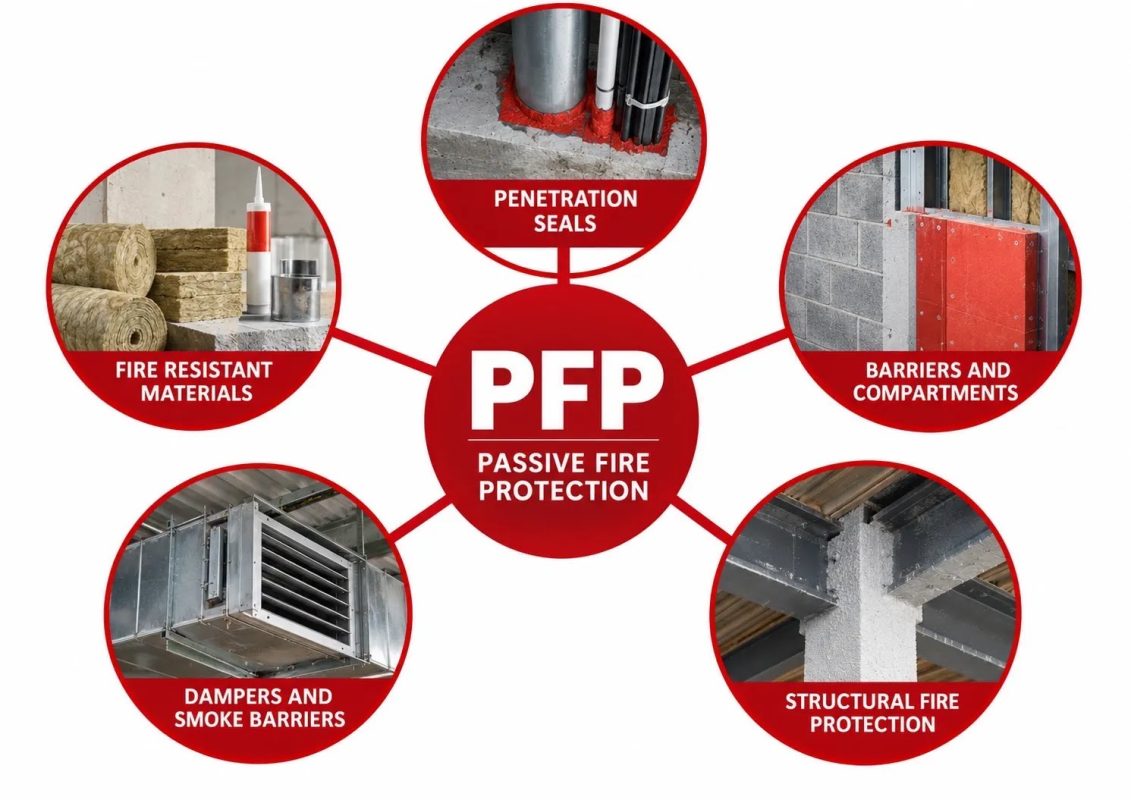
Passive fire protection incorporates fire-resistant systems into a building’s structure. Unlike active systems that respond to a fire, these measures provide protection without manual activation. Fire-resistant walls, floors, doors, barriers and penetration seals work together to contain fire and smoke. We help you understand how these components contribute to safer evacuation and limit damage to adjoining areas.
Identifying Defects Through Specialist Surveys
Passive fire protection in the Midlands begins with understanding the condition of fire-resistant compartments. Standard fire risk assessments may not fully examine concealed spaces where breaches occur. Our specialist compartmentation surveys help identify unsealed openings, service penetrations and hidden defects. These findings provide building owners with guidance on the remedial work needed to restore compartment integrity.
Maintaining Compartmentation Through Fire Stopping
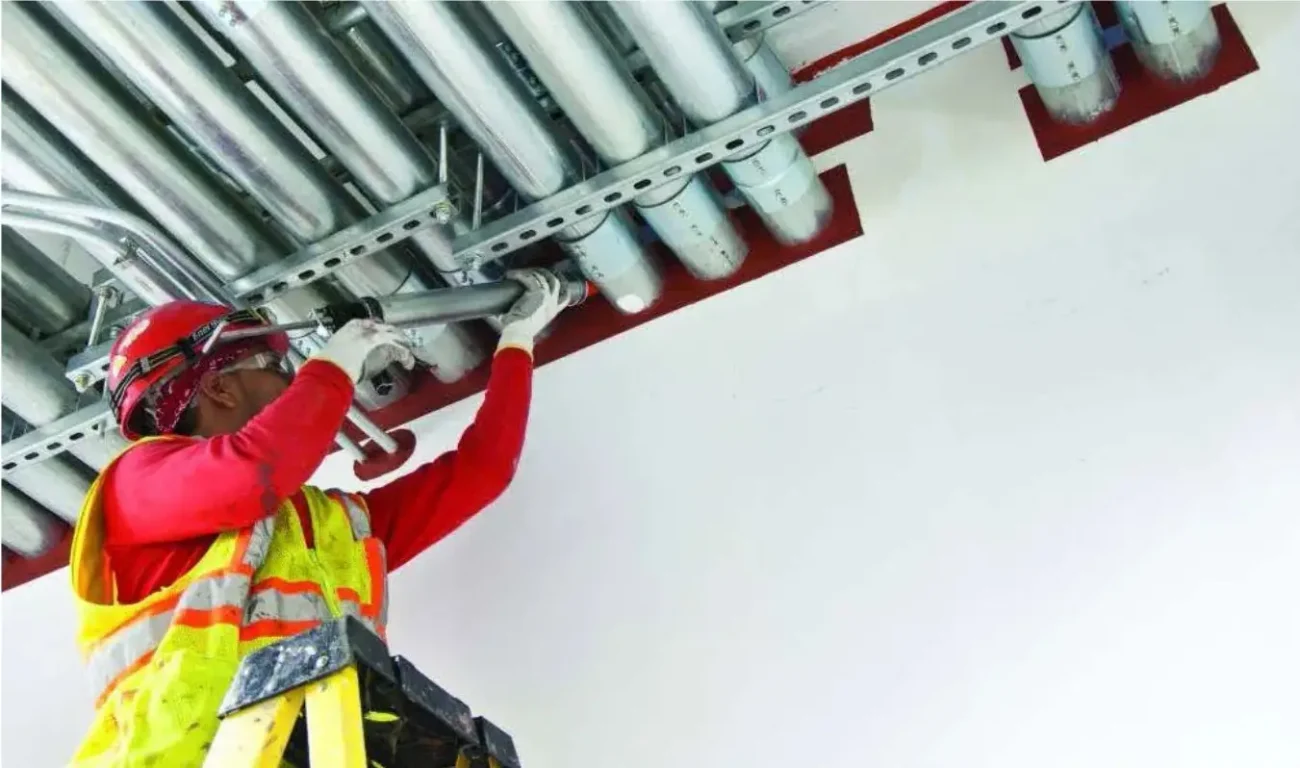
Mechanical and electrical installations often create openings in fire-resistant walls and floors. These gaps can allow flames and smoke to travel between compartments. A specialist passive fire protection company assesses such openings and selects suitably tested systems. We use appropriate materials, including ablative-coated mineral wool and intumescent mastic, to seal penetrations according to the surrounding construction and required fire resistance.
Selecting Suitable Fire Protection Materials
Different penetrations require different protective solutions. Intumescent pipe collars, sleeves and wraps react to heat to help close openings around services. Socket-box inserts, sealants and putties can address other compartmentation defects. Our trained technicians assess each application to determine which materials are suitable, helping maintain the intended performance of fire-resistant construction.
Restricting Fire Spread With Fire Barriers
Concealed spaces within roofs, ceilings and walls can provide routes for flames, smoke and hot gases. Fire barriers subdivide these spaces, helping restrict movement between compartments. We offer mineral fibre and lightweight woven cloth barrier solutions, with selection guided by construction characteristics and required fire performance. Suitable barriers are important where concealed cavities connect different building areas.
Protecting Escape Routes With Fire Doors
Fire doors help maintain compartmentation and protect routes used during evacuation. FD30 and FD60 doors are designed to provide 30 and 60 minutes of fire resistance respectively under specified test conditions. Appropriate smoke seals can restrict smoke movement. We emphasise correct specification, installation and routine maintenance to help doors perform as intended during a fire.
Supporting Compliance in Operational Buildings
Fire protection work often needs to take place while buildings remain occupied. Our experience across healthcare, education, commercial, residential and industrial environments helps us manage installations while minimising disruption. As third-party accredited contractors, we focus on suitable product selection, trained personnel and installation quality. This approach supports building owners in addressing identified deficiencies and maintaining fire safety standards.
Conclusion
Passive fire protection in the Midlands requires specialist assessment, appropriate materials and reliable installation. At Onyx Fire Ltd, we combine technical expertise with practical fire stopping, compartmentation surveys, fire barriers and fire door solutions. Our approach helps you address structural fire safety concerns and support compliance.
For specialist fire protection tailored to your building, contact us today to discuss your requirements and arrange a professional consultation.
Frequently Asked Questions
1. What does a passive fire protection company do?
It assesses fire-resistant construction, identifies compartmentation defects and installs suitable systems to help restrict fire and smoke movement.
2. Why are compartmentation surveys important for building safety?
They identify concealed defects and unsealed penetrations that may compromise fire resistance and require remedial work.
3. Is passive fire protection in the Midlands available for occupied buildings?
Yes. We provide services for operational buildings, including schools, hospitals and care homes, with a controlled approach to minimising disruption.